Plan to replace migrant workers with machines
PUTRAJAYA: If all goes well, the need for a huge number of migrant workers in Malaysia will soon be a thing of the past.
The country is pushing hard to achieve a high level of automation in labour-intensive sectors such as plantations to reduce dependence on migrant labour.
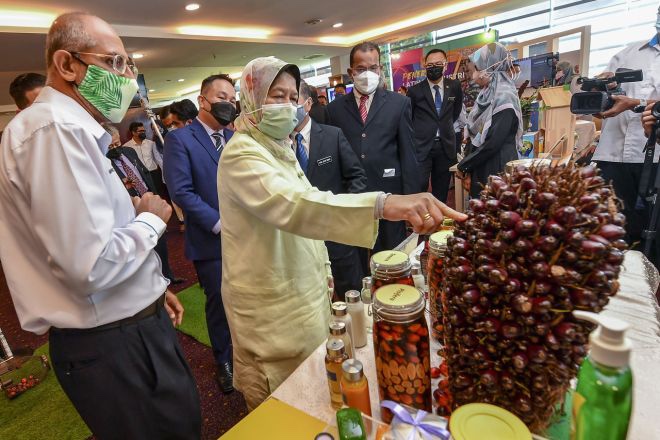
Plantation Industries and Commodities Minister Datuk Zuraida Kamaruddin said the move would involve the introduction of modern technology.
“Of course, this will not happen overnight. Our target is to achieve this in three to five years.”
Zuraida said her ministry is conducting tests on various equipment designed for the various processes in plantations.
“We want to find equipment that is best suited for the sometimes undulating topography of our estates,” she said.
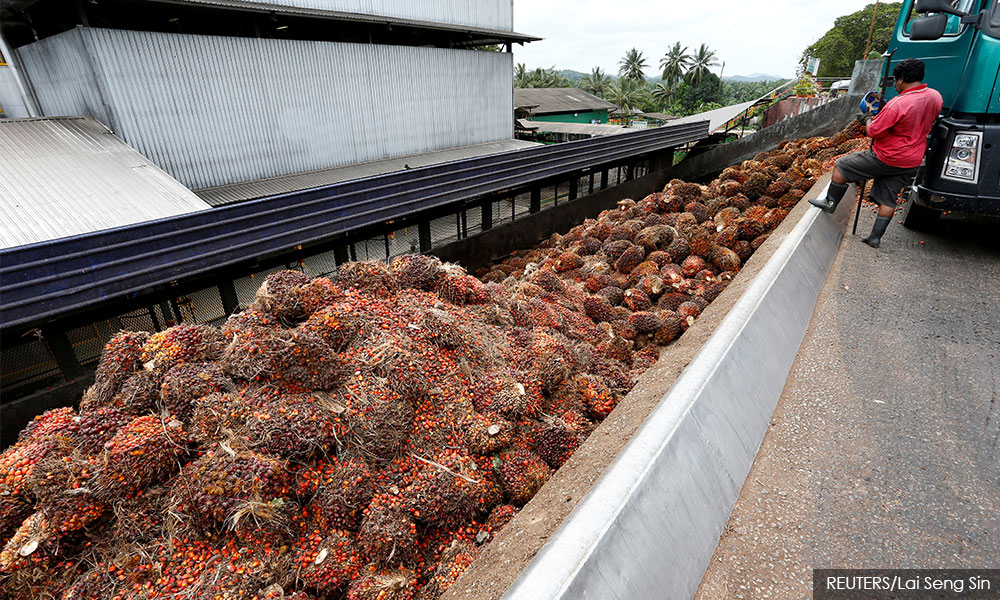
One of the equipment being tested is the “spider system”, that comprises a truck with five arms and a conveyor belt, used in the harvesting process. With the system, the workforce can be reduced by 30% to 40%.
Zuraida pointed out that once the cultivation and harvesting processes are automated, the reliance on cheap foreign labour could be reduced.
“That means we would also be able to pay higher salaries to locals who want to remain in the sector,” she said.
Malaysia’s dependence on migrant labour has led to many social problems, one of which is conflict among workers of different nationalities.
Allegations of poor working conditions, unsuitable living quarters and inhumane treatment have also beset the industry.
Data from the Statistics Department shows that as of the last quarter of 2021, there were 7.34 million migrants in Malaysia.
On allegations of mistreatment of migrant workers, Zuraida said most of the complaints had been “blown out of proportion” by foreign non-governmental organisations (NGO).
“They just hear it from one or two persons and quickly come to the conclusion that we are guilty of such transgressions. They don’t even bother to speak to us,” she said.
She claimed that some of the migrant workers had made wrong assumptions because they did not understand the Malaysian way of life.
“The NGO are taken up by the false accusations.”
Zuraida said the government was also plagued with allegations of child labour “simply because the NGO need to find new ways to attack us”.
“Is there any harm in children picking palm kernels to earn some pocket money? In Europe and the United States, children are allowed to work before or after school to earn extra money,” she said, adding that such NGO should give Malaysian authorities a chance to explain.
She said the accusations were among factors that prompted the government to look for ways to reduce its dependence on migrant labour, and that most of the attacks linked to palm oil were focused on its effects on health.
“Their products such as corn oil, soy oil and sunflower oil are actually not as healthy as palm oil,” she said, adding that major edible oil producers in the West had to compete with Malaysian palm oil producers for market share.
“They are just trying to hurt us to win a bigger share of the market.”
However, she said the market for vegetable oils would continue to grow and even now, production has not been able to keep up with demand.
“The market is big enough for everyone, so there is no need to attack palm oil.”
Zuraida said it is the government’s plan to make Malaysia the world’s largest producer of palm oil.
“We are now the second largest producer.”
To achieve that target, her ministry is going all-out to promote the product to large consumers such as India, China, Pakistan and the Central Asian republics.
“We will grow our market share where possible. We are not going to restrict ourselves,” she added.









 Political Awareness should be every ones responsibility...Weakness of leaders should be exposed and good deed of leaders should be praised...ABAI